
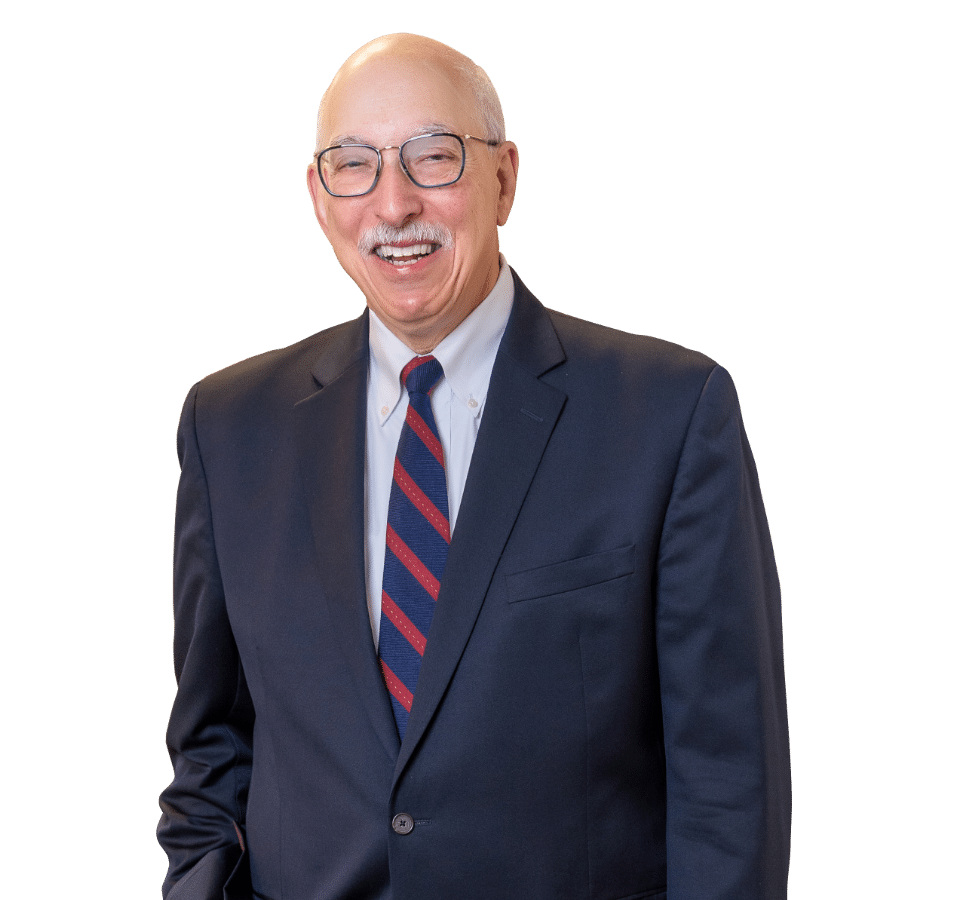
Biography
Joe’s clients have included public officials (elected and appointed), including a Commissioner of the New York City Police Department and sitting judges; a member of the Baseball Hall of Fame; a U.S. Olympic medal winner; a celebrity chef; one of the largest manufacturers of home cooling equipment in China; the world’s leading food and beverage company; the leading manufacturer of Italian cheese products in the United States; a world leader in the field of sound control and manufacturing of acoustic panels; one of the largest dental HMO’s in the Northeast; the regional expressions of the two largest Lutheran denominations in New York and one of the oldest continuous Buddhist temples in the United States. On behalf of these and other clients, including small and family owned businesses, individuals and religious and nonprofit organizations, he has tried more than 100 cases (most by jury), and handled appeals in the New York Court of Appeals, three of the four Appellate Divisions and the United States Court of Appeals for the Second Circuit.
Joe earned his J.D. cum laude and Order of the Coif from the Syracuse University College of Law and his undergraduate degree from Cornell University.
Education
- J.D., Syracuse University College of Law (cum laude)
- B.S., Cornell University
- 2024 City & State Above & Beyond Award: Social Services
- Martin Luther School “Good Guy – Community Service Award”
Publications & Presentations
- 8/30/22: Article “Virtual Meetings for Not-for-profit and Religious Organizations”
- 9/4/19: Mr. Milano was quoted in the New York Law Journal following an acclaimed litigation win “Court Can’t Rule on Lutheran Church’s Challenges to National Administration’s Property Takeover”
- 4/29/19: Mr. Milano hosted the “Faithful & Smart Episode: Better Call Saul! –When does a Congregation Need to Hire a Lawyer?”
- 9/26/18 Client Memo: MLMIC: Initial appointment of policy administrator does not necessarily extend to distribution of the cash payments
- 9/12/18: Client Memo: Approval of sale of MLMIC; payouts to policyholders
- 7/25/18 Client Memo : Doctors and dentists have potential to receive large payouts
Religious Matters:
Ming Tung v. China Buddhist Ass’n, 124 AD3d 13 (1st Dept 2014) [996 N.Y.S.2d 236 2014 N.Y. Slip Op. 07777]
Represented China Buddhist Association (“CBA”), the oldest continuous Buddhist Temple in the City of New York, with Temples in Manhattan and Queens, which was mired in litigation in several courts and had already received negative judicial decisions before my representation. Ultimately, all decisions were favorable to CBA and upheld on appeal through NY State courts; adversaries sought review in the United States Supreme Court, which denied that application.
Excommunicated religious organization members’ Article 78 proceeding presented nonjusticiable religious issues.
Background: Members of religious organizations until they were excommunicated commenced proceeding under Article 78, seeking an order directing organization to hold an annual membership meeting, as required by its bylaws, appoint a receiver to determine names and addresses of all its members eligible to vote, and hold a vote regarding its future. The Supreme Court, New York County, Geoffrey D. Writght, J.S.C., granted the petition to the extent of invalidating the organization’s membership meeting and directing that another general meeting be held with members included. Organization appealed.
Holding: The Supreme Court, Appellate Division, held that members’ petition presented nonjusticiable religious issues that could not be resolved through application of neutral principles of law.
Reversed, order vacated, and petition dismissed.
Affd by Court of Appeals, Mtr of Ming Tung, 26 N.Y.3d 1152 (2016).
cert. denied by Supreme Court of the United States, Ming Tung, et al. v. China Buddhist Association, et al., 580 U.S. 1049, 137 S.Ct. 628, 196 L.Ed.2d 517, 85 USLW 3317, 85 USLW 3324 (2017).
Metropolitan New York Synod of the Evangelical Lutheran Church of America v. David, 95 AD3d 419 (1st Dept 2014) [943 N.Y.S.2d 476 2012 N.Y. Slip Op. 03378].
Petition to transfer church property was properly granted. Hide synopsis
Background: Synod of Evangelical Lutheran Church petitioned to transfer real property of a congregation. The Supreme Court, New York County, Paul G. Feinman, J.S.C., granted the petition. Objectors appealed.
Holdings: The Supreme Court, Appellate Division, held that:
1 objections to petition were barred by res judicata, and
2 determination that the congregation had become so diminished and scattered that it could no longer function was nonjusticiable religious determination.
Affirmed.
Muhammad v. Ramadan, 228 AD3d 675 (2d Dept 2024) [212 N.Y.S.3d 435 2024 N.Y. Slip Op. 03054].
Court providently exercised its discretion in granting plaintiffs’ motion to strike defendants’ answer in action alleging breach of fiduciary duty.
Background: Plaintiffs brought action against defendants alleging breach of fiduciary duty. The Supreme Court, Queens County, Frederick D. R. Sampson, J.S.C., granted plaintiffs’ motion to strike defendants’ answer (2021 WL 5044366), and defendants appealed.
Holding: The Supreme Court, Appellate Division, held that the trial court providently exercised its discretion in granting plaintiffs’ motion to strike defendants’ answer.
Affirmed.
Eltingville Lutheran Church v. Rimbo, 174 AD3d 856 (2d Dept 2019) [108 N.Y.S.3d 39 2019 N.Y. Slip Op. 05957].
Court lacked subject matter jurisdiction to consider synod’s decision to impose synodical administration on a local church.
Background: Church commenced action against synod and its bishop seeking a determination that the synod’s determination to place the church under synodical administration was unlawful, and seeking to enjoin the synod from closing the church, seizing or taking control of its property, or interfering with its operations, including the school operated by the church. The synod and bishop moved to dismiss the action based upon documentary evidence and for lack of subject matter jurisdiction. The Supreme Court, Richmond County, Alan C. Marin, J.S.C., granted the motion to dismiss. Church appealed.
Holdings: The Supreme Court, Appellate Division, held that:
1 trial court lacked subject matter jurisdiction to consider synod’s decision to impose synodical administration, and
2 church was not entitled to injunctive relief preventing synod from seizing or taking control of church’s property.
Affirmed.
App dismissed, 34 N.Y.3d 1024 (2019) (Appeal dismissed without costs, by the Court of Appeals sua sponte, upon the ground that no substantial constitutional question is directly involved. 34 N.Y.3d 1024, 138 N.E.3d 1093, 115 N.Y.S.3d 211 (Mem), 2019 N.Y. Slip Op. 86187.
Presbytery of Long Island v. Central Presbyterian Church, 251 AD3d 743 (2d Dept 2026) [262 N.Y.S.3d 751 2026 N.Y. Slip Op. 04332].
Church property was held in trust for presbytery, as presbytery contended in declaratory judgment action against church after church voted to leave denomination.
Background: Presbytery brought action against local church for declaratory and injunctive relief, seeking declaration that church property was held in trust for presbytery after church voted to leave denomination. The Supreme Court, Suffolk County, Martha Luft, J.S.C., denied church’s cross-motion for summary judgment as to dismissal of complaint and counterclaims to quiet title and, upon searching the record, awarded summary judgment to presbytery, declaring property was held in trust for presbytery and dismissing church’s counterclaims. Church appealed.
Holdings: The Supreme Court, Appellate Division, held that:
1 property was held in trust for presbytery, and
2 application of section of Religious Corporations Law providing legal framework by which a Presbyterian congregation in New York could become a corporation under state law to determine whether presbytery obtained property interest was not unconstitutional.
Affirmed, with costs, and remitted for entry of declaratory judgment.
Miscellaneous Matters (unrelated to religious entities).
Lai v. Gartlan, 34 AD3d 242 (1st Dept 2006) [824 N.Y.S.2d 40 2006 N.Y. Slip Op. 08043]
Payment of settlement amount was not contingent on an accounting that was not mentioned in settlement agreement.
Background: Defendants filed motion to enforce settlement agreement. The Supreme Court, New York County, Charles E. Ramos, J.S.C., granted motion. Plaintiffs appealed.
Holding: The Supreme Court, Appellate Division, held that payment of settlement amount was not contingent on an accounting that was not mentioned in the settlement agreement.
Affirmed.
Double Fortune Property Investors Corp. v. Gordon, 55 AD3d 406 (1st Dept 2008) [866 N.Y.S.2d 111 2008 N.Y. Slip Op. 07966]
At-will termination of agreement did not preclude recovery of escrowed funds.
Background: Plaintiff brought complaint against escrow agent for return of escrowed funds. The Supreme Court, New York County, Charles E. Ramos, J.S.C., denied agent’s motion to strike plaintiff’s complaint and granted plaintiff’s cross motion for summary judgment. Agent appealed.
Holding: The Supreme Court, Appellate Division, held that at-will termination of agreement did not preclude recovery of escrowed funds.
Affirmed.
River Ave, Inc. v. Foodfest Cash and Carry, Inc., 190 AD3d 447 (1st Dept 2021) [140 N.Y.S.3d 204 2021 N.Y. Slip Op. 00077].
Eminent Domain. Department of Transportation’s acquisition of permanent easement over sidewalk adjacent to leased premises allowed termination of lease under lease’s eminent domain provision.
Background: In action regarding lease, the Supreme Court, Bronx County, Ruben Franco, J.S.C., denied plaintiff’s motion for summary judgment and granted summary judgment in defendants’ favor (2019 WL 4929545). Plaintiff appealed.
Holdings: The Supreme Court, Appellate Division, held that:
1 loading docks passed to defendants as an appurtenance to the lease, and
2 Department of Transportation’s acquisition of a permanent easement over sidewalk adjacent to leased premises permitted defendants to terminate the lease.
Affirmed.
In re Billmyer, 142 AD3d 1000 (2d Dept 2016) [37 N.Y.S.3d 330 2016 N.Y. Slip Op. 05994].
Executor breached his fiduciary duty with regard to sale of decedent’s brownstone residence to an acquaintance who then resold it for nearly twice the purchase price.
Background: Executor of estate petitioned for the judicial settlement of his account. The Surrogate’s Court, Kings County, Lopez Torres, S., granted the separate motions of the objectants for summary judgment granting their respective objections to the account which alleged that the executor sold certain real property below fair market value, and surcharging him accordingly, and imposed a surcharge on the executor. Executor appealed.
Holdings: The Supreme Court, Appellate Division, held that:
1 executor breached his fiduciary duty and was negligent with regard to the sale of decedent’s brownstone residence, and
2 Surrogate’s Court providently exercised its discretion in awarding 6% interest on the surcharge imposed for executor’s breach of fiduciary duty.
Affirmed.
Elghanayan largest probate proceeding in history of Queens County Surrogate’s Court. Successfully represented one of 5 adult siblings in contested probate proceeding. Probate Proceeding, Will of Moluk Elghanayan, File No.2015-673.
Davis. Represented executor designated in “do it yourself” will prepared by “ZoomLegal” and executed at hospital without attorney supervision. July 2026, defeated motion for summary judgment to prevent probate of the will brough by disinherited relatives. A cautionary tale! “Estate of Richard Davis, Surrogate’s Court, New York County, File No.: 2022-4557.
Petitions.
The New York Not-for-Profit Corporation Law and Religious Corporations Law require that not for profit and religious corporations receive approval from the New York Supreme Court or Attorney General for certain real estate (sales, mortgages, leases longer than five years) and other transactions (mergers, consolidation). Joe has prepared dozens of these petitions for complex and novel transactions.
Greenpoint Monitor Museum Supreme Court, Kings, County, Index No.: 504719/2024.
On July 16, 2026, the New York City Council approved the Monitor Point project.
https://www.monitorpointonquay.com/
Monitor Point is a master-planned, mixed-use waterfront community at 40 and 56 Quay Street in Greenpoint, Brooklyn, developed through a public-private partnership between Gotham Organization, the Metropolitan Transportation Authority, and the Greenpoint Monitor Museum, requiring rezoning and approval by the City of New York.
The project will deliver approximately 1,324 new homes across two residential buildings. The West Building will include approximately 958 mixed-income homes, with roughly 70% market-rate and 30% affordable units. The East Building will provide 366 homes, 100% of which will be affordable thanks to a partnership with HPD. In total, Monitor Point brings 662 affordable homes (50% of the project) to the waterfront, serving a range of income levels, including deeply affordable and senior housing, with approximately 110 homes reserved for formerly homeless New Yorkers.
Monitor Point will also create approximately 52,500 square feet of publicly accessible waterfront open space connecting Greenpoint and Williamsburg along the East River, and a permanent home for the Greenpoint Monitor Museum — celebrating the neighborhood’s shipbuilding and maritime history at the site where the USS Monitor was built.
The project enables the relocation of two MTA facilities from the development site and from 65 Commercial Street to a new consolidated facility in East Williamsburg, removing industrial truck traffic from a residential neighborhood and unlocking the full realization of Box Street Park. Gotham will make annual contributions to the NYC Parks Department for maintenance of adjacent Bushwick Inlet Park.
The linchpin of the project was a transfer of air rights from the Greenpoint Monitor Museum, Joe’s client, which owned an unimproved parcel of land at the project site, to the developer, Gotham Organization, long before the rezoning and New York City approval process. In February 2024, Joe filed a petition in New York State Supreme Court seeking approval of the transfer of those air rights. In February 2025, the Court granted that approval, before the rezoning and project approval by the City. In On July 2026, the New York City Council approved the Monitor Point project.
Notable:
In January 2022, Joe wrote about new laws that Governor Kathy Hochul signed in November 2021, that permanently gave New York not-for-profit corporations and religious corporations the ability to hold virtual meetings beyond the expiration of any emergency declarations related to COVID-19. Although the new laws made the option of virtual meetings permanent, “secular” not-for-profit corporations and religious corporations were treated differently.
A not-for-profit corporation’s board of directors could choose to hold an “all virtual” meeting (where attendance is solely by means of electronic communication, with no “in person” attendance) or a hybrid meeting (where some attend by means of electronic communication, and others attend “in person”), if such meetings were not prohibited by the organization’s certificate of incorporation or bylaws.
Religious corporations, however, were not permitted to hold hybrid meetings, and could only hold all virtual meetings if the board of trustees (by whatever name, e.g., board of elders, church council, etc.) was authorized to determine the place of meetings, and they, in their sole discretion, determine that the meeting shall be held solely by means of electronic communication, otherwise, it must be held solely in person. Under the “new” November 2021 amendments, unlike corporations formed under the N-PCL, meetings of religious corporations could not be held partially virtually—they must be held either entirely in person or entirely virtually.
That is no more.
At 9:00 p.m. on Sunday, August 21, 2022, Joe received an email from someone he did not know, informing him that on August 17, 2022, Governor Hochul signed into law Chapter 518 of the Laws of 2022, which repealed RCL § 28 and replaced it with a new § 28, which allowed religious corporations to conduct virtual and hybrid meetings as any “secular” not-for-profit corporation can. He confirmed that what the writer, Jonathan Mark, wrote was accurate and spoke with him the next day.
Jon, an esteemed lawyer, now retired, at the well-respected Cahill Gordon & Reindel, and former mayor of Scarsdale, New York, told Joe that he was advising his temple on rules for virtual meetings and saw Joe’s memo that religious and secular corporations were treated differently with respect to hybrid meetings. This clear disparity prompted him to contact and ask his New York State Assemblywoman, Amy Paulin, to amend the Religious Corporations Law to bring it into line with the Not-For-Profit-Corporation Law that allows for hybrid meetings for secular nonprofits. In a burst of understated candor, he said, “Somewhat to my surprise, that has now been done.” See this link:
https://nyassembly.gov/leg/?default_fld=%0D%0A&leg_video=&bn=A09409&term=2021&Summary=Y&Actions=Y&Text=Y
It is quite gratifying to see the end result of our simple memo updating a change in the law. Thank you, Jon Mark for this and for bringing some logic to the law. We often hear the old, unattributed saw, “If you like sausages, it’s best not to see them being made.” Well, you seem to have made this hot dog quite effortlessly.